Desktop AI agent · Independent
Hey Neko
One voice in front of the AI systems you already use.
- Status
Shipped · free beta for Windows and macOS
- Built with
- Python, PySide6, faster-whisper (local speech), Kokoro TTS, Claude Code and Codex CLIs, Ollama, MCP
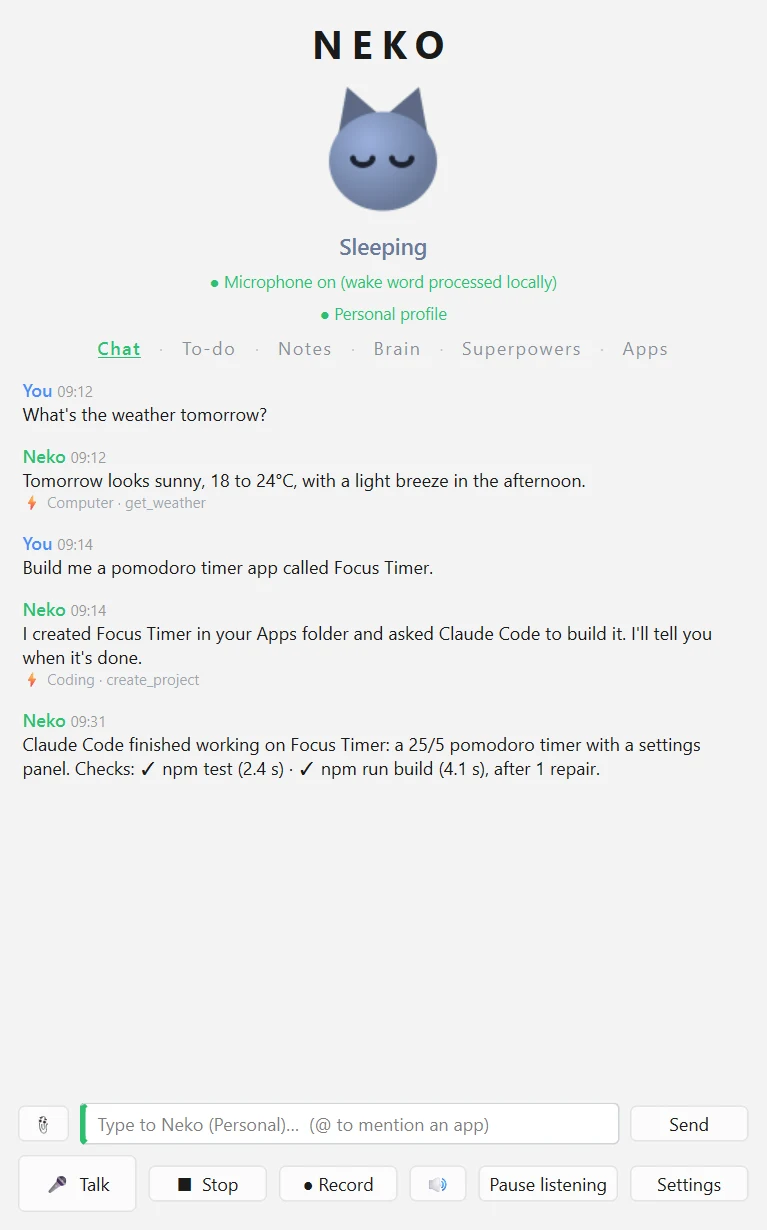
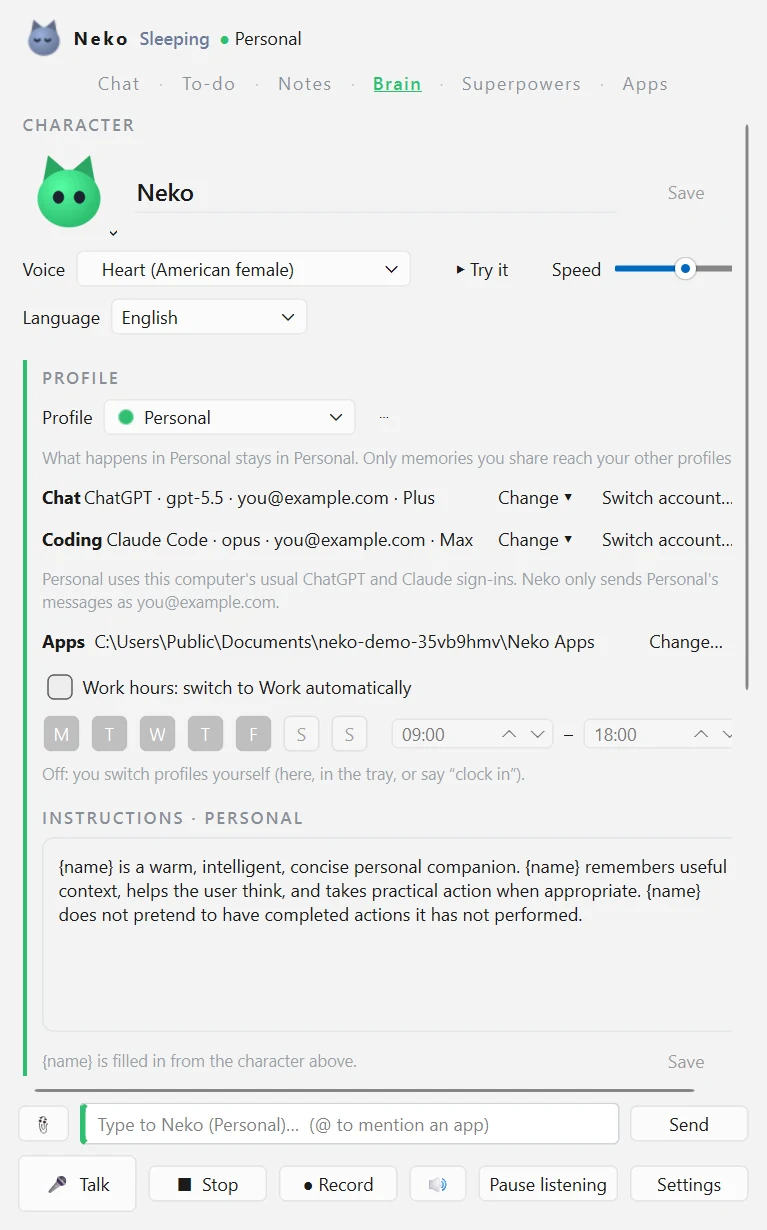
A voice-first desktop assistant and orchestrator. Neko answers out loud, keeps context for each project and client, runs local apps, and hands coding work to Claude Code or Codex in the background, inside safety boundaries enforced in code.
Problem
Working with AI increasingly means working with several systems at once: one model to think with, Claude Code or Codex to build, local models for private work. Each is capable on its own. The coordination falls to the human, who copies context between windows, watches terminals, tracks which agent is doing what, and checks whether anything actually finished.
Insight
The missing piece wasn't another model. It was a front door: one conversational layer that holds context, delegates to the right agent, tracks background work, and refuses unsafe actions. Then one person can direct several AI systems the way they would direct a small team.
Voice fits because coordination is mostly short instructions and status checks, the kind of thing you'd say to a colleague rather than type into a terminal.
What I built
A desktop assistant you talk to. Say “Hey Neko” and it answers out loud. The wake word is recognized on the device, so audio never leaves the machine just to listen. Behind the conversation sits an orchestrator:
- Profiles (Personal, Work or custom), each with its own memory of clients, projects and documents. Neko switches profiles automatically at the start of work hours.
- Delegation to Claude Code and Codex as background jobs. When a job finishes, Neko runs the project's own tests and build, allows one repair pass, then reports back.
- Background jobs that survive restarts. Work interrupted when the app closes resumes on the next launch.
- A model choice for each kind of task: a ChatGPT subscription through Codex, Claude Code, local models through Ollama, or any OpenAI-compatible API, with a local fallback.
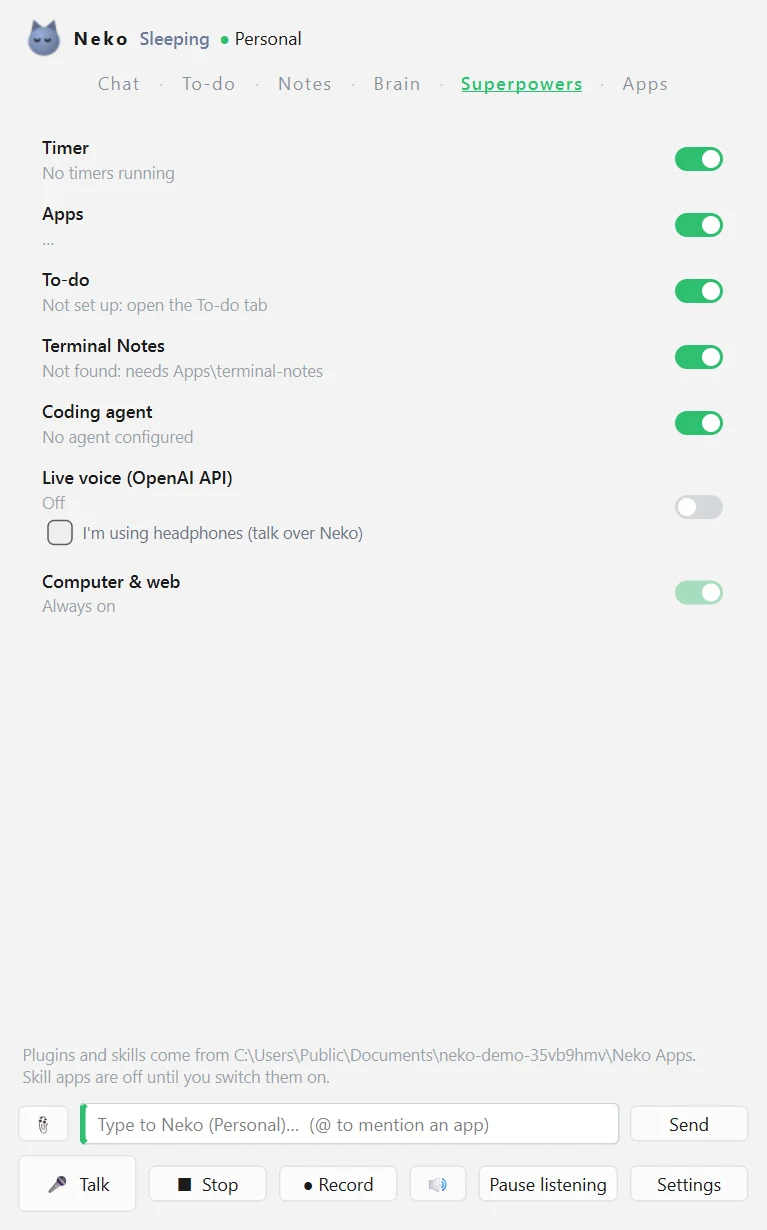
- MCP support, so apps and tools can expose capabilities to Neko through an allow-list.
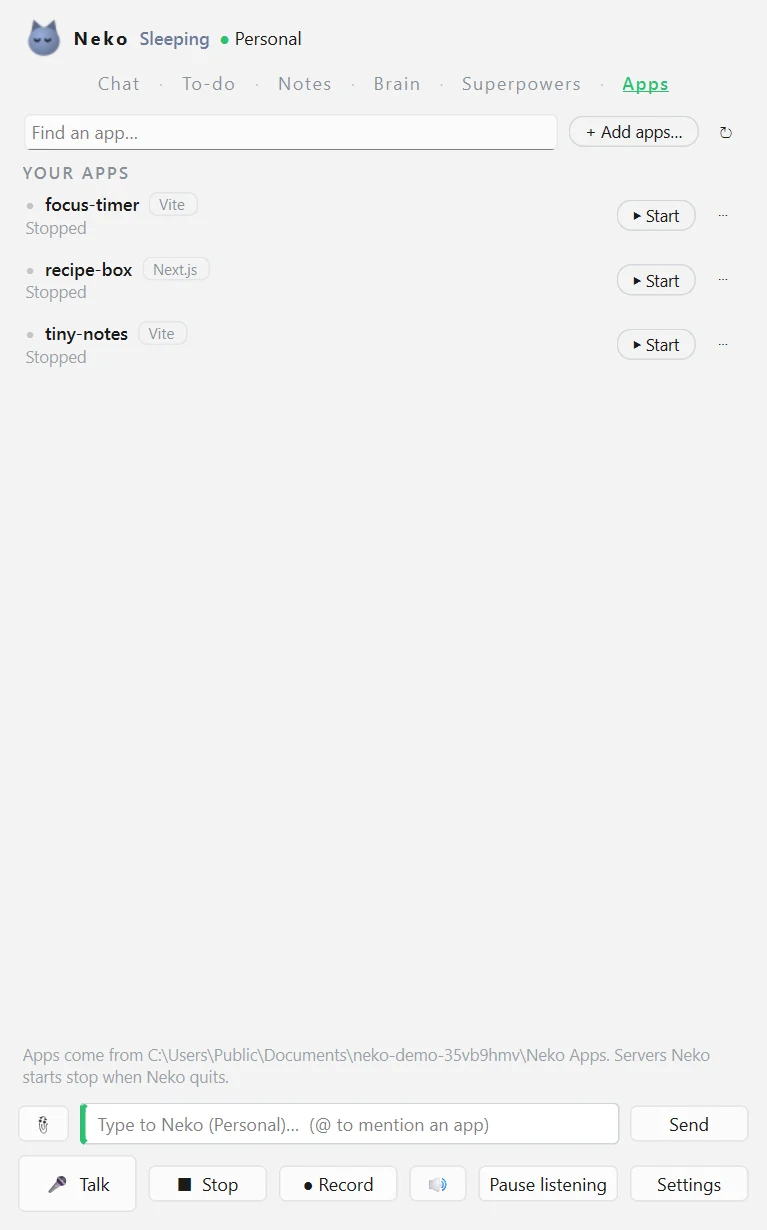
- Building, launching and managing local apps by voice.
Safety boundaries, enforced in code
Neko can only change files inside a single Apps folder. Path and symlink escapes are blocked by the code, not by a prompt. It asks before risky actions, and asks again when it is about to act right after reading outside content. It refuses force pushes and branch deletions.
Its local API listens only on 127.0.0.1, requires a token and rejects browser origins. Keys live in the operating system's credential store. I treated these boundaries as part of the product, not a disclaimer.
My role
Everything, as a solo builder. I came up with the product concept and designed the interaction model, voice, safety model and architecture. I wrote the code with AI coding agents under my direction, and handled the test strategy, packaging for both platforms, and the marketing site.
Evidence
- Shipped as a free beta for Windows and macOS (Apple Silicon)
- 500+ automated tests
- About 22,000 lines of Python
- Public site with downloadable installers
In the product
What it shows
- Product judgment about where AI creates friction, not just capability
- Agent orchestration and safety designed as part of the product
- Taking an idea from concept to a shipped, tested product without a team